- Coach Craft
- Posts
- Everything Matters

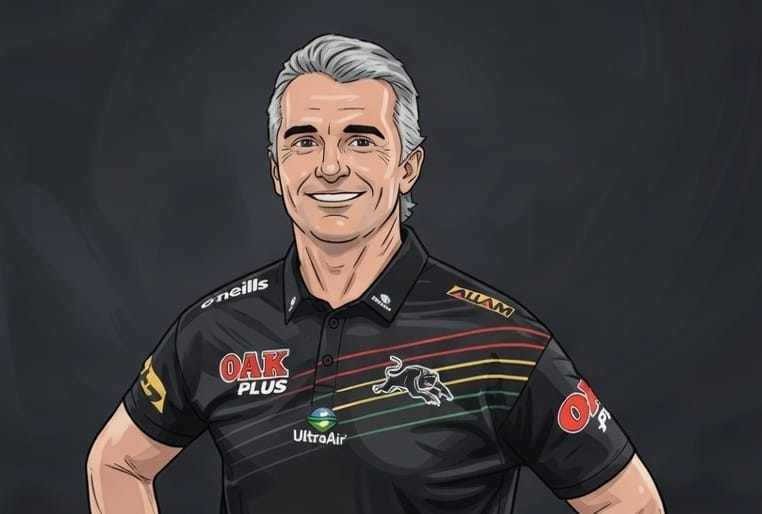
Typically, I don’t love autobiographies written by coaches during the middle of their career.
Their reflections aren’t as sharp, their perspective not as deep, and there’s still a competitive bravado in their words as they try to intimidate current opponents.
One book I did enjoy, however, is Ivan Cleary’s recent release, Not Everything Counts but Everything Matters.
Cleary has presided over the Penrith Panthers juggernaut that won four straight NRL titles between 2021 and 2024, and has been in the final four in each of the last six seasons.
I found Cleary’s book to be different not because of his team’s winning, but because of the amount of not winning he did before this recent run. After twelve seasons across three different clubs, Cleary had just one losing Grand Final appearance to show for it. In the book, he aptly draws comparisons between himself and Andy Reid (the Philadelphia Eagles version). As Cleary writes, “I was second on the list of coaches with the most premiership games who hadn’t won a premiership.”
It’s this long, arduous climb to the summit that I believe gives Cleary the sharp reflections, deep perspective, and lack of competitive ego that clouds other books.
Like this passage from the introduction, which sets the tone for the entire book:
“For my entire coaching career, I now realize, I have been content to survive. Just climbing the ladder was a success. Making the finals or signing my next contract was a victory. Even though I’ve only occasionally had a team that is a genuine premiership threat, I’m not sure I have ever really believed I am capable of winning the competition. I have to face the facts of professional sport. There’s not much in-between with success. You’re either winning or you’re not. So I decide that winning is now critical. It’s win or bust. This book isn’t my life story. It’s about the magic that can happen when you’re prepared to put everything on the line in pursuit of excellence. It’s about risking it all.”
In reasonably predictable fashion, the ‘popular highlight’ on Kindle is the last two sentences of Cleary’s opening gambit. People love quotes about putting it all on the line and taking risks.
But the key line, for me, is actually this one: I’m not sure I have ever really believed I am capable of winning the competition.
It’s rarely perceived this way, but there are a lot of professional coaches who lack confidence in themselves. I’d go so far as to say a majority are like Cleary; content to survive, have the team make progress, and eek out another contract.
You see, just like our athletes, the higher we climb as coaches, the more we are faced with ourselves. At the extreme edges of achievement, the task at hand begins to wilt away and what’s left is you…under a microscope.
Do you truly believe that you’re capable?
Will your leadership stand up under the most intense scrutiny?
These values you say you have — what happens to them when they’re compromised?
Are you willing to love yourself enough to not get in the way of achievement?
This is the reason I give Personal Craft the same prominence as the other domains, because it’s imperative to take the time to work on yourself throughout your coaching career. Whether you want it to be this way or not, you don’t want to be trying to figure yourself out while you’re in the midst of high achievement. By then, it’s too late.
After a dozen years in the big seat, Ivan Cleary decided to get out of his own way. And he writes about what happens when you make that decision: “There’s a subtle difference between wanting a premiership and really going after it, and I hadn’t taken the risks you take when you really want to win. This was the first time I’d gone all out.”
These subtle differences of have an all-out culture shows up in the language he chooses to describe Penrith throughout his book, such as:
“You have to have the courage to handle mistakes. Every time you go out there, there’s some emotional risk attached. You are putting yourself out there to be judged: by fans, by the media, by other teams. You need the courage to face your fears, every week, in big games. You have to risk losing in order to win.”
“You need to pay a price to win. Intensity at training is a big piece of that price.”
“When you’re a Panther, there is an expectation that you deliver anywhere, anytime.”
“Whenever we turn out onto a rugby league field, my expectation is that if we don’t win, we’ll at least go very close. That is what a consistent, reliable team does.”
“We aim never to let our opponent see that we’re tired. Strong body language is something we pride ourselves on, particularly when we’re under fatigue. We also look for tiredness in the opposition.”
“Staying at the top requires even more energy than getting there, so you really have to want it.”
This may seem like stock-standard coach speak, but a lot of coaches say this kind of stuff without any idea of how to build it into their systems.
I have watched Penrith a lot over their winning years, and they play like the quotes above. They could win under any conditions — snow storm, thunderstorm, at Melbourne Storm. They would hunt the opposition, methodically probing for weaknesses and memorizing them to exploit later. They had an energy and a thirst to problem-solve whatever situation was in-front of them.
Cleary and the Panthers didn’t luck their way into a run of premierships, they went all-out to engineer a juggernaut. From the very beginning, it was designed to win, and win again, and win again…despite routinely having their players and coaches poached by rival clubs.
‘Everything matters,’ as Cleary notes, but I would argue what mattered most was getting their head coach to believe that he was capable of not just winning a premiership, but building a juggernaut.
One-Off Coaching Sessions with Cody
In January and February, I’m trying something new.
I’ve opened up a handful of hours for one-off coaching sessions for anyone who thinks I can help — head coaches, GMs, CEOs, assistants, performance staff, athletes, coach developers, aspiring authors.
Sixty minutes. Three topics of your choosing. No ongoing commitment.
As a Coach Craft subscriber, you’ve got first access to my calendar for 2026.
You can search, book, and pay using my Calendly, and I’ll be in touch directly once your session is locked in.