- Coach Craft
- Posts
- Card Tricks

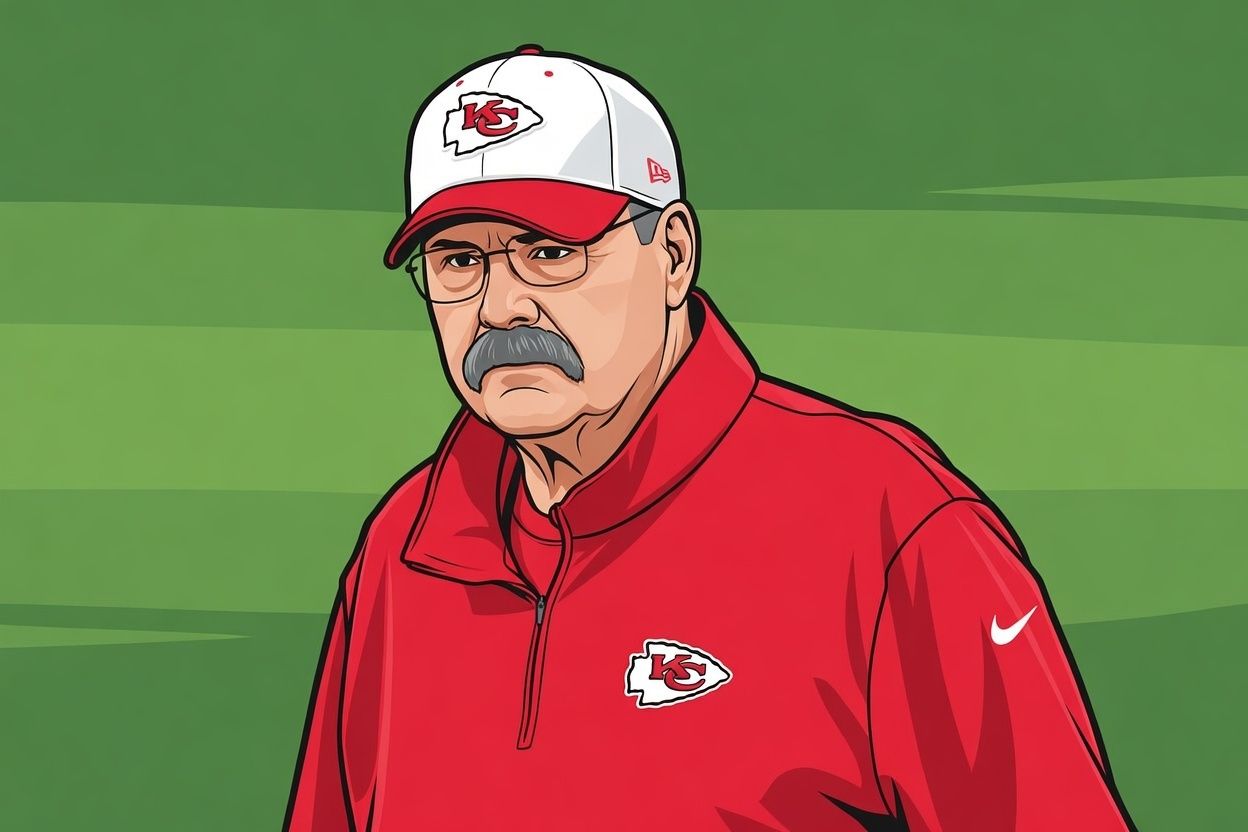
Andy Reid is the only coach in NFL history to win 100 games with two different franchises.
Weirdly, Reid’s three Super Bowl wins probably downplay the magnitude of his sustained success.
In his 27 full seasons as an NFL head coach he has won fifteen division titles, and his teams have progressed to either the league championship or the Super Bowl on twelve occasions.
Basically, every second season an Andy Reid-coached team is in the final four. He’s a master of putting his teams in a position to win.
And he’s done it by being a champion of clear communication.
“I bring a 3×5-inch card into every meeting,” Reid says. “And if I can’t get it on that 3×5 card, you’re not hearing it. So my team meetings are like that,” he adds, snapping his fingers.
Not only does the physical constraint of the card size help Reid not communicate too many points, it forces him to sort the most important points in advance of the meeting.
This is useful in a number of ways:
1) you have to sort all of the potentially important pieces of information and rank their real importance, surfacing only the critical points.
2) over a span of days and weeks, this consistently orients and re-orients the team and staff towards what’s most important right now.
3) any messages from the leader (ie. head coach) come with heightened emphasis due to the power dynamic, so his speaking points should be the highest emphasis. Too many speaking points risks clouding this.
4) the detail of pro football means there’s likely more than 2-3 important points to be made, so this forces a discussion about where in the workflow this important information will be delivered to the players.
Reid, who regularly ranks amongst the most efficient coaches for using the players’ time, says his priority is to get them out on to the field so they can do what they’re there for.
“What they want to do is play football. They want you to give them the information — coaching points that can make them the greatest possible player they can be — and then go play the game!”
When I worked in UX and we were designing for the space constraints of an iPhone, we had a saying that would keep us intentional about our design: they don’t need to know how the database works, they just need to be able to use the interface.
It means: we don’t need to explain to them how computers work, we just need to help them do their banking. Our menu items were a great example of this: Move Money, or Open an Account. It’s pretty clear what would happen when you click on those, isn’t it?
Athletes are like this, too.
They don’t need to know all the things we care about as coaches. The back-end stuff may be relevant sometimes, but not usually.
The athletes need the points that will make them better, and then their focus should be on doing the work to get better.
Cody’s Notes
Personally, I am dubious of the idea of pattern-matching meeting length to some arbitrary length of ‘attention span’ that we have attributed to a generation of people. The TikTok generation, who apparently can’t concentrate for more than 15 minutes, are also the ones that consume 3-hour podcasts and play hours-upon-hours of video games. So which one is their attention span?
Maybe, just maybe, the problem is your content. Not their attention span.
A recent meta-analysis backs this up: in 179 studies on concentration, across 32 countries, between 1990 and 2021, the findings were that children didn’t decline—and adults actually improved. When we want to focus, we can. Our distraction issues are a matter of motivation, not ability.
Adam Grant and Daniel Immerwahl had a marvellous conversation about this recently on Adam’s podcast.
This means — in a professional environment — meetings should be whatever length they need to be to get across the pertinent information. Often, this probably should be on the shorter end because you’ve got clarity on what’s important. But sometimes it just might take a while, and that’s got to be okay.
Coaches are often told to be ‘concise’ in their meetings, but the word is poorly understood. Concise is not a proxy for short. Concise means without excess.
A 10,000 word essay can be concise, just as a 3-hour movie can be concise. It is not the duration, it is the content.Why don’t you try Andy Reid’s 3×5 card trick and see what happens to your meetings. Let me know.
Now Open: Craft School
I've added a dozens more 1:1 times for coaching sessions.
Plus, there’s now three new group classes where I’ll teach the craft of coaching.
March 26: The Craft of Coaching
April 9: The Craft of Writing a Book
April 23: The Craft of Effective Communication
If any of this sounds down your alley, you can book here.